Mechanics Differences: Olden Era and HoMM 3
This great article about Olden Era and Heroes 3 mechanics differences is from Reddit and was created by redditor tpbug, with whose permission I am adding it in its original form.
Global Map
- Daily Movement Points: A hero’s daily movement points on the adventure map are no longer dictated by a creature’s speed (slowest in army). Instead, a hero’s movement is primarily determined by its base amount plus any skills, subskills, artifacts or other bonuses.
- Town Portal and Dimension Door: In Heroes 3, the important global spells called “Town Portal” and “Dimension Door” were gated behind access and leveling of specific magic schools. In Olden Era, these similar spells are available to heroes via Astrology Points and High Neutral Magic School:
- Astrology Points: A new mechanic called “Astrology Points” dictates the unlock of these and other neutral spells. Astrology Points accumulate daily based on town income (similar to towns generating Gold and Law Points). Astrology Points unlock neutral magic via the Kingdom Observatory interface.
- You can both unlock neutral magic spells as well as upgrade them with Astrology Points.
- In order to use High Neutral global map spells, heroes must be of a certain hero level (not magic school level). Check each global spell for their unique level requirements.
Region Borders
- Region Borders: To avoid “Dimension Door” abuse (i.e. teleporting over mountains and difficult monsters–which has historically been a particular problem in PvP environments and banned by the community in previous HOMM installments), regions are now separated by with region border lines (press “z” hotkey to show on global map).
- Region Border Guard: A region’s border guard must first be defeated before it can be crossed by flight or “DD”.
- Region Accessibility: If a region is not accessible (due to a border guard not having been defeated), the biome beyond a region border indicator will show in greyscale.
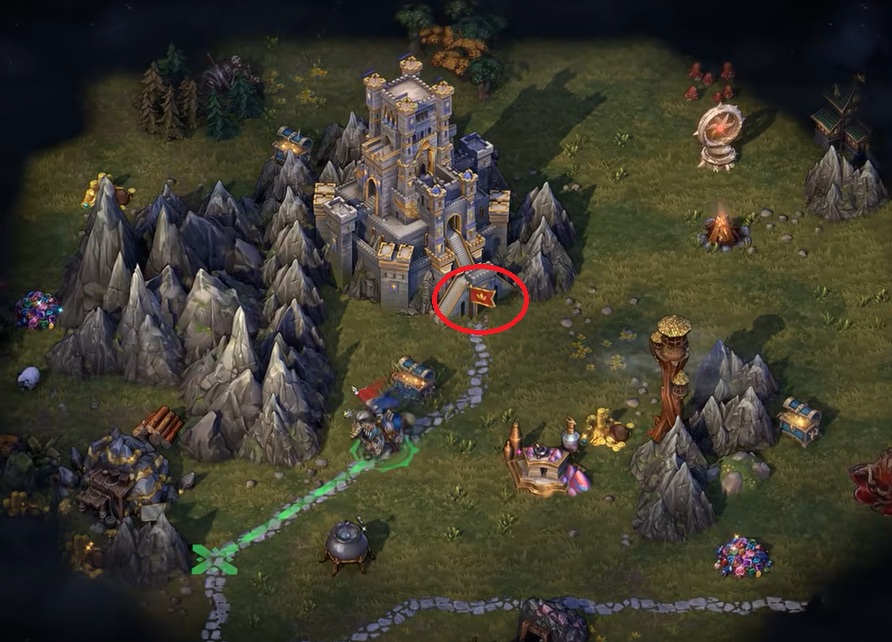
- Region “Control”: A region and its “control” (sometimes needed for subskill bonuses or victory conditions) is determined if a player controls the primary town within the region. The primary town of a region is determined by a small “crown” icon on the flag outside of a given town.
Recources
- Picking up Resources: Picking up global map resources, items or interacting with objects on the global map that are exactly 1 tile away from your hero diagonally or horizontally no longer consumes hero movement points.
Using “space bar” (by default) is the hotkey to interacting with an adjacent tile. It is no longer needed to move one tile away and then back to a global map object to interact with it.
External Dwellings
- External Dwellings: Any flagged dwellings on the adventure map not only produce creatures, but the creatures accumulate week-by-week instead of being capped at only 1 week’s worth of growth. Additionally, external dwellings add permanent growth to your kingdom’s towns of the same creature.
Many templates will intentionally feature dwellings near your starting zone that match your own faction in Olden Era.
Resources and Artifacts
- Alchemical Dust: A new resource called “Alchemical Dust” (Rest in Peace, Sulfur) specifically exists as a means for upgrades.
- Dust is used to upgrade town creature dwellings, hero artifacts or spells in your kingdom’s Observatory.
- Dust is gained via the “Alchemical Depot” building (daily income), destroying unwanted artifacts, visiting certain map objects or via other bonuses (i.e. Faction Laws, subskills, artifacts).
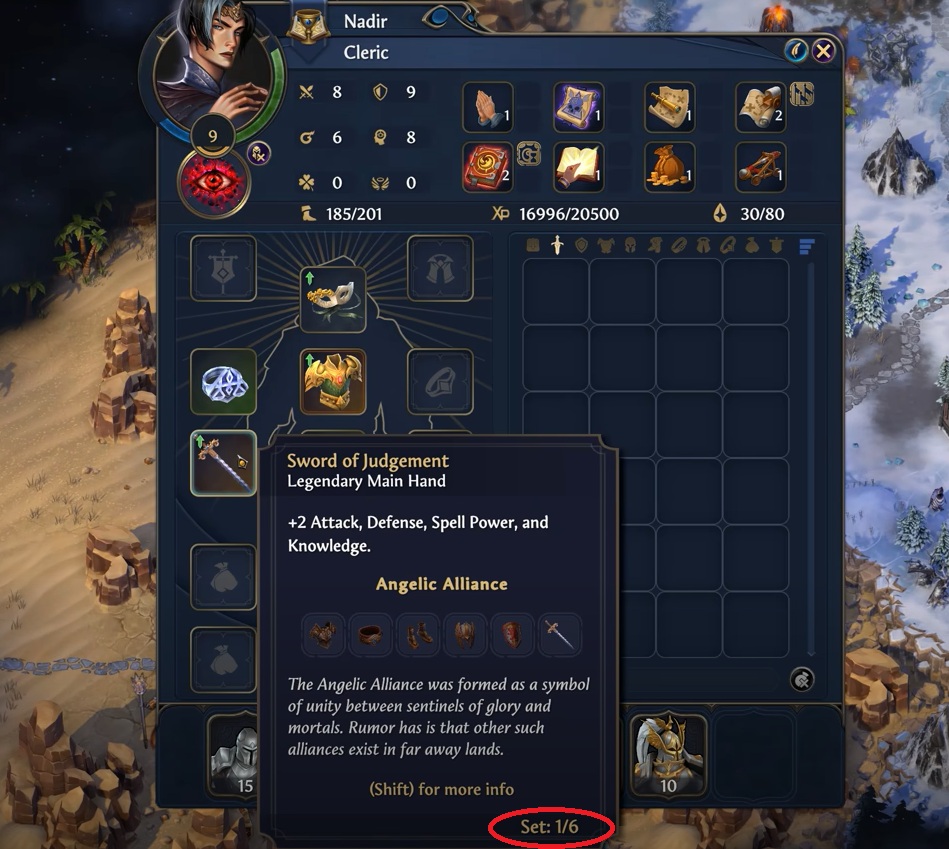
- Artifact Combinations: Artifacts no longer are combined. Some artifacts, if equipped together, provide set bonuses.
Towns and Factions
- Morale Penalties/Bonuses: Having an army comprised all of one faction type results in a +1 morale bonus. Two different factions is neutral morale loss/gain. Three factions is -1 morale penalty, and so on.
- All creatures have their own morale and luck minimums and maximums based on their “type”. For example, “Undead” are not affected by morale bonus or penalty. “Dragons” cannot have negative morale or luck (but it can still be positive).
- Neutral (non-faction) creatures do not affect morale.
- Necropolis undead units no longer have a unique morale penalty.
Many spells and effects only can hit certain creature types too.
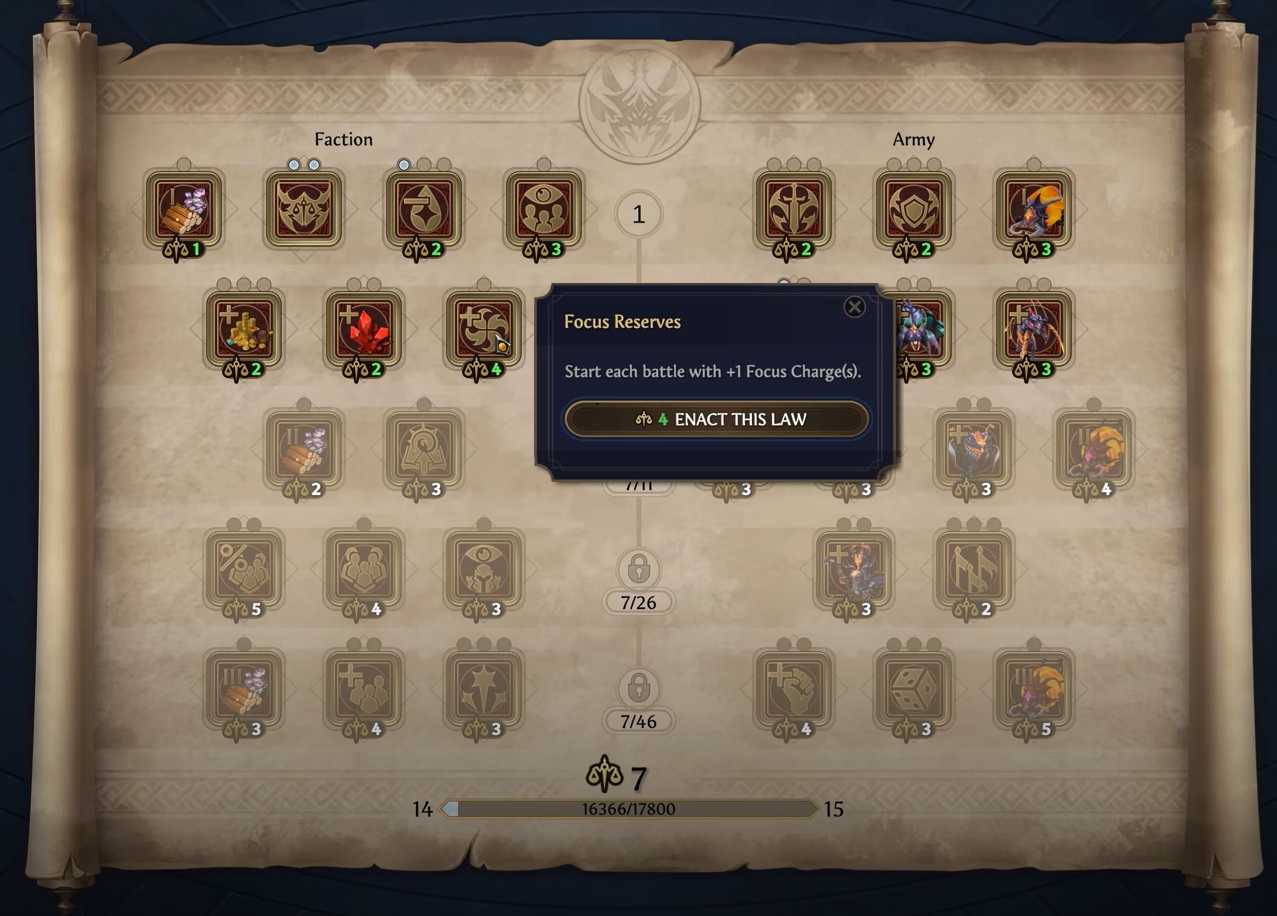
- Law Points: Outside of income provided by towns, law points are given by taking flagged objects and winning fights with heroes. Use law points to upgrade your faction kingdom and army.
- Branching Upgrades: Both Townhall and Fort upgrades have “Pick 1 of 3”. These bonuses give either extra gold, astrology or law income. Creatures can also upgrade and freely swap (no gold cost) between 2 unique upgrade paths.
Skills
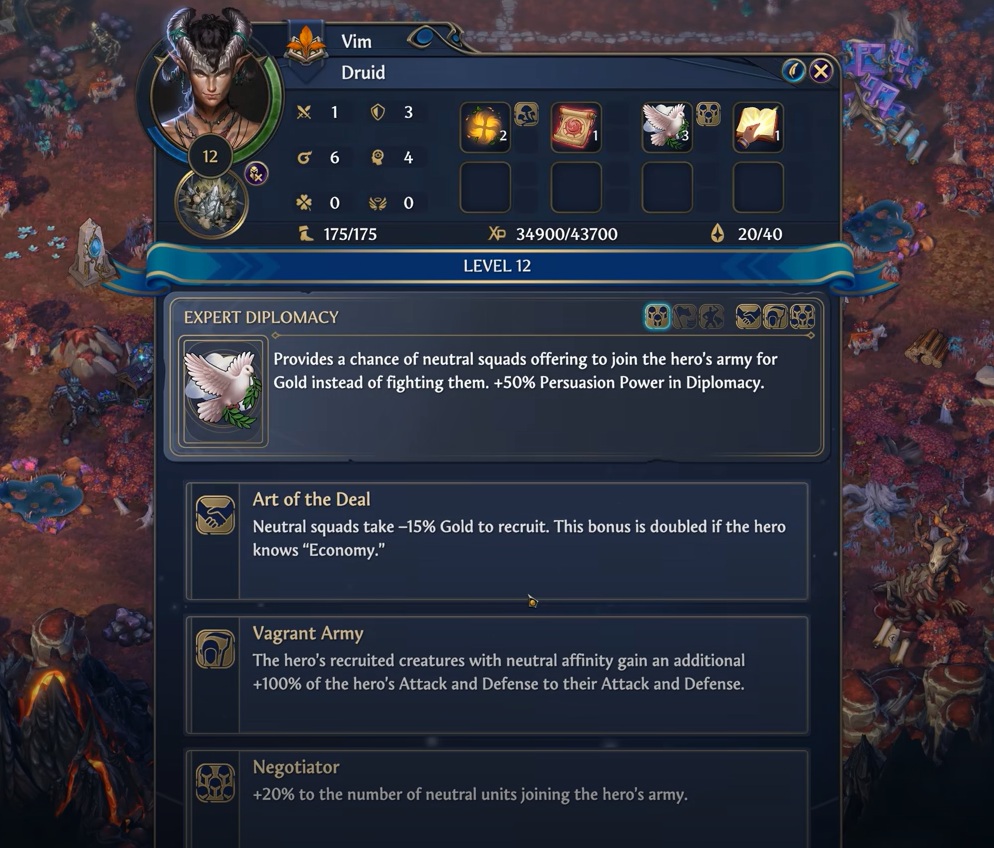
- Faction Skills: Every faction and their associated heroes have a specific faction skill (similar to how Necropolis in HOMM3 has “Necromancy”). Each faction in OE features skills similar in uniqueness, but their effects are specific to the faction.
- Subclasses: Heroes can become a “subclass” (gain a powerful permanent bonus based on their faction hero class) by leveling 5 predefined skills to Expert proficiency. This is viewable on a hero’s character sheet.
- Subskills and Synergies: When leveling a hero skill to Advanced or Expert proficiency, you will be given 3 subskill choices (always predetermined based on the skill itself). Subskills can be more effective if they share a synergy with a specific skill (i.e. “if you know X Skill, Y subskill is +% more effective.”)
Skills in similar function and name to Pathfinding, Archery and Eagle Eye from HOMM3 are now subskills in Olden Era.
- Magic School Skills: The skills for the 4 primary magic schools (Nightshade, Daylight, Primal and Arcane) in Olden Era no longer give access to the spells within that same school based on tiers of 3/4/5 for basic/advanced/expert, respectively. Instead, learning a magic school skill at Basic proficiency is enough to learn up to tier 5 spells within that same school. The “Advanced” and “Expert” proficiencies in a magic school skill, instead, give +1 levels to spell in that school or other bonuses.
Note: Wisdom skill still gives heroes access to spell tiers 3/4/5 based on Basic/Advanced/Expert proficiency.
Combat
- Initiative and Speed: A creature’s Speed no longer determines their turn order. Instead, Speed (as it works in HOMM3) is split into two different combat stats: Initiative and Speed.
- Initiative governs each creature’s turn order in a combat round.
- Speed governs how many hexes a creature can move in a combat round.
- If creatures’ initiatives are the same, their speed value (whichever is higher) is instead used to calculate who goes first in a given round.
- If both speed and initiative values are the same, attacking army VS defending army determines who goes first (this is then alternated each round until combat is over).
Initiative/Wait Command: Waiting in a round inverts a creature’s initiative (e.g. 4 becomes -4) and they act in reverse order for that round. This can allow for double turns on a single creature between the round transition too if they have very high initiative.
Army Formation: If you have multiples of the same creature in your army (i.e. a power stack and two 1 stacks of that same creature), the left-to-right positioning determines their particular round order each combat.
- Cooldowns: Spells and abilities now have a cooldown associated with them. This can be reduced by various means. The cooldown of spells (generally speaking) is 2 rounds at tier 1, 3 rounds at tier 2, etc. as of writing this.
Focus
- Focus Abilities: Creatures with innate abilities no longer may cast them for free. Instead, a new resource called “Focus” dictates both hero and creature ability usage. Dealing and receiving damage on a creature generates Focus Points. With enough points, you get a charge (3 is the max by default, but it can increase with subskills and laws).
- Heroic Strike: All heroes have a means by which to spend focus charges via an innate skill called “Heroic Strike”. This deals an amount of damage based on current hero level multiplied by a percentage.
- Neutral Squads in PvE also generate and spend focus based on their creature abilities and may use them on the player in combat.
Focus Generation Details: Dealing melee damage with creatures generates 2 focus points whereas dealing ranged damage with creatures or receiving a direct attack by a creature generates 1 focus point. Retaliations do not generate focus points nor do double strikes generate additional. Focus Points and Focus Charges are not the same, so read carefully when assessing abilities and artifacts.
- Long Reach: A new “attack type” has been introduced commonly into Olden Era which is “Long Reach”. Creatures with this attack type can attack with a 1-hex gap. This does not trigger retaliation.
Tooltips are still unclear on whether or not ranged bonuses/penalties affect “Long Reach” in various ways though.
- “Tactics” by Default: When attacking a player, neutral squad or creature bank, it is possible to rearrange your creatures prior to combat beginning. This acts as a pseudo-tactics formation given to all players. Tactics (as an actual acquirable skill) meanwhile gives further options via subskills and extended formation range.
- Skip Defense Bonus: Using “Skip” in combat no longer gives a Defense bonus to a creature by default. There is a subskill of the “Battlecraft” skill that allows for similar behavior, however.
- Kittenhorns: Unfortunately, Kittenhorns exist in the game and you will inevitably be griefed by them, uncontrollably rage and want to toss your keyboard into a nearby wall.
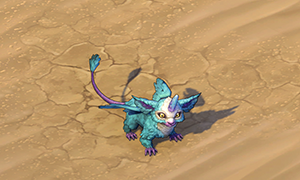
Remnant of Mad Times — When this creature dies, “Berserk” is cast upon its killer. They are forced to attack the nearest creature.
Source: https://www.reddit.com/r/OldenEra/comments/1sue2n2/mechanics_differences_101_olden_era_and_homm3/
Heroes III Griffin shield badge in stock

WoG Folder – All HoMM mods in one place