Did you know? facts about HoMM: Olden Era (part 1)
A new Did you know? series of short insights highlighting the most interesting features, changes, and hidden details in Heroes of Might and Magic: Olden Era. Discover what’s new, what’s different, and what longtime fans will love to explore!
In Heroes of Might and Magic: Olden Era, a hero’s daily movement points on the adventure map are no longer dictated by the speed of the slowest creature in their army, as it was in Heroes III. Instead, movement is primarily based on the hero’s base value, enhanced by skills, subskills, artifacts, and other bonuses.
In Heroes of Might and Magic: Olden Era, upgrading your town walls does more than just improve defenses. Reaching Wall Level II or III also boosts creature production — similar to how Citadel and Castle upgrades worked in Heroes III.
In Heroes of Might and Magic: Olden Era, interacting with objects or picking up resources and items that are exactly one tile away — whether diagonally or horizontally — no longer consumes a hero’s movement points.
In Heroes of Might and Magic: Olden Era, flagged dwellings on the adventure map don’t just produce creatures — their growth accumulates week by week, instead of being limited to a single week’s worth like in earlier titles.
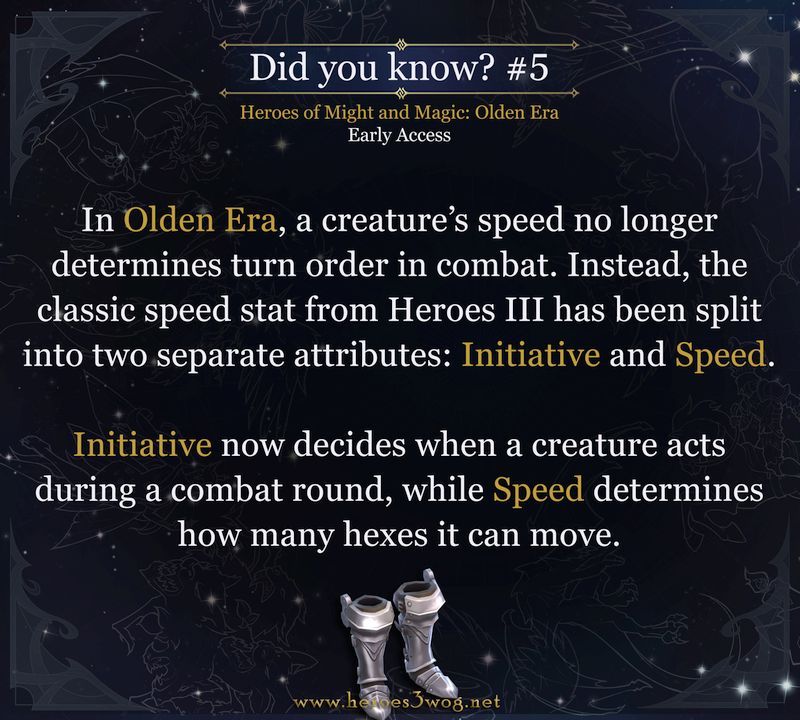
In Heroes of Might and Magic: Olden Era, a creature’s Speed no longer determines turn order in combat. Instead, the classic Speed stat from Heroes III has been split into two separate attributes: Initiative and Speed. Initiative now decides when a creature acts during a combat round, while Speed determines how many hexes it can move.
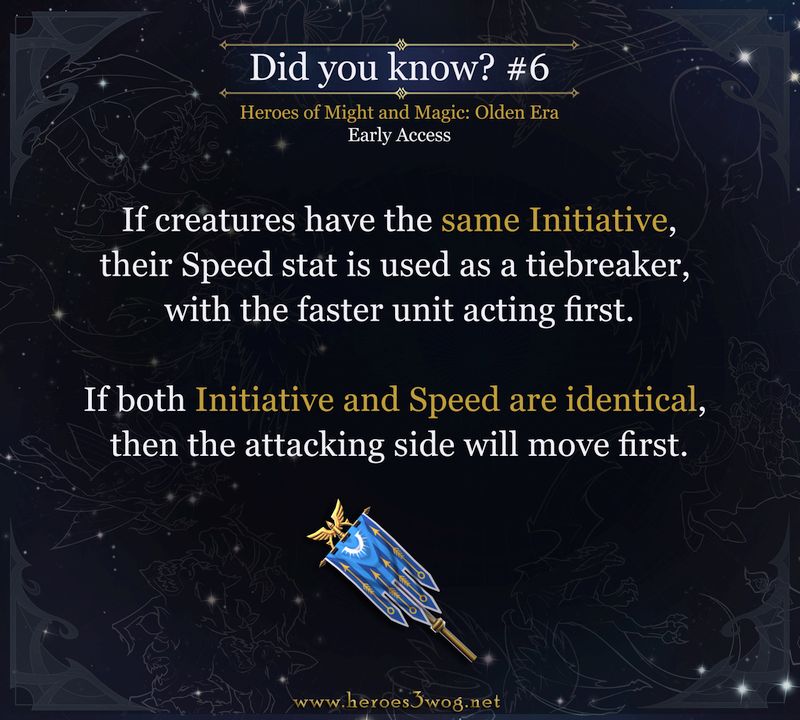
If both Initiative and Speed are identical, the attacking and defending sides determine who goes first, and this priority alternates each round until the combat ends.
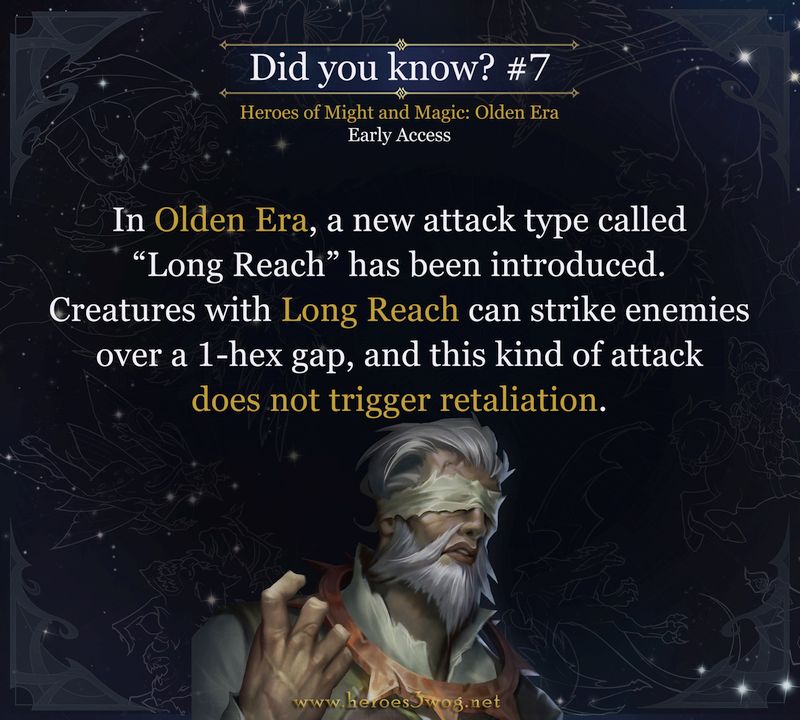
In Heroes of Might and Magic: Olden Era, a new attack type called “Long Reach” has been introduced. Creatures with Long Reach can strike enemies over a 1-hex gap, and this kind of attack does not trigger retaliation.
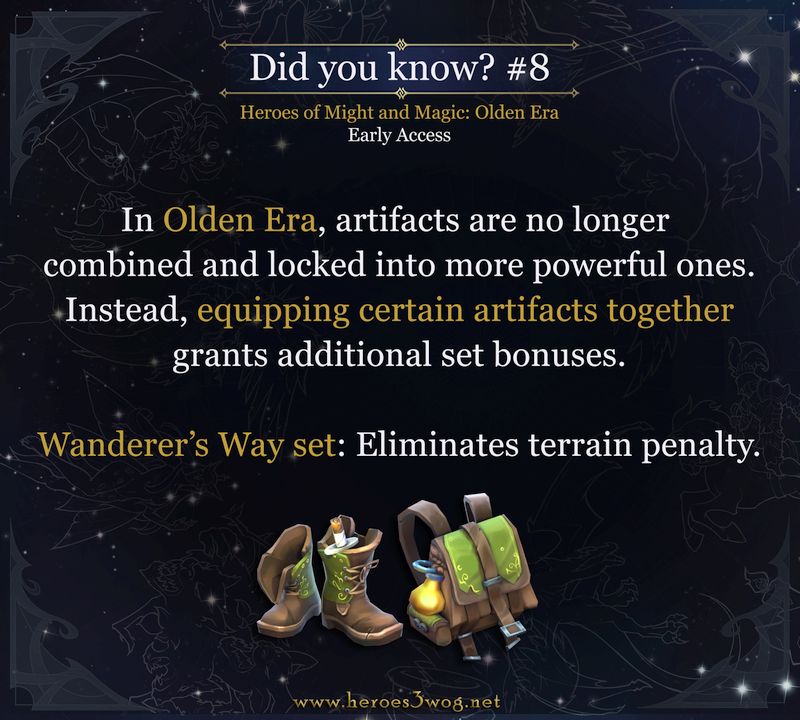
In Heroes of Might and Magic: Olden Era, artifacts are no longer combined into more powerful ones. Instead, equipping certain artifacts together grants additional set bonuses.
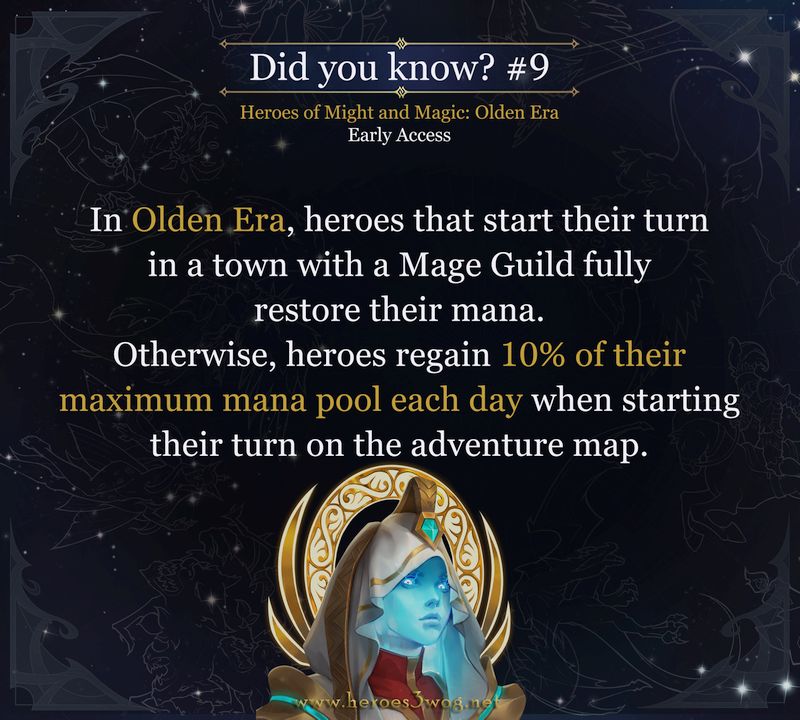
In Heroes of Might and Magic: Olden Era, heroes that start their turn in a town with a Mage Guild fully restore their mana. Otherwise, heroes regain 10% of their maximum mana pool each day when starting their turn on the adventure map.
In Heroes of Might and Magic: Olden Era, every hero starts with a spellbook regardless of their class. Unlike Heroes III, where spellbooks were typically tied to magic-oriented heroes, both might and magic classes now begin with access to spells from the start.
Heroes III Griffin shield badge in stock

WoG Folder – All HoMM mods in one place



Thank you very much for your work, Liso1!